

Do You Stand With Refugees?
In Cyprus – a small Mediterranean island and a member of the European Union since 2004 – people are still being deprived of some of the most basic human rights and freedoms. In 1974, the people of Cyprus became refugees in their own homeland.
In order to escape the Turkish atrocities and barbaric crimes which threatened their lives, thousands of families were forced to flee their homes, leaving everything behind. They are doomed to see their homes from a distance and are only able to reminisce on memories, since Turkish armed troops that are still illegally occupying almost half of the island forbid their return. We stand on the belief that refugees have a right to live with dignity and regain what legally belongs to them.
Imagine YOUR homeland being divided and YOUR family being forced to flee your home.


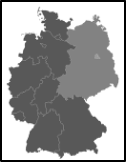
Could you imagine the cities of London, Berlin, Paris, Madrid, Canberra, Brussels, Amsterdam, Rome, Prague, Stockholm, Vienna, Moscow, Washington D.C., Mexico City, Buenos Aires, Brasilia, Beijing, New Delhi, Seoul, or YOUR capital city being divided and being kept under illegal military occupation with armed troops restricting your access?
15 November 1983

On 15 November 1983, the Turkish Cypriot leadership, backed and controlled by Turkey, unilaterally declared a pseudo-state in the occupied area, the so-called “Turkish Republic of Northern Cyprus” (“TRNC”). This illegal entity is recognised ONLY by Turkey, while the European Court of Human Rights (ECtHR) verified that this illegal state is under the absolute control of the Turkish army. In addition, the ECtHR found Turkey responsible for many human rights violations in Cyprus.
A Brief Chronology of Events
| Date | Event |
|---|---|
| January 1950 | A referendum took place, expressing the national desire of unification of the Cypriot island with Greece (“ENOSIS”), where 95.7% voted in favour (including Turkish Cypriots). The outcome of the referendum was rejected by the British Empire, who had control of the island as one of its colonies. |
| April 1955 – 1959 | An armed movement, EOKA, was subsequently organised, serving the ultimate objectives of freedom from British rule and the union of Cyprus with Greece. |
| 11 & 19 February 1959 | The uprising stops as the Zurich and London Agreements are concluded. They granted “guarantee” powers to Greece, the United Kingdom and Turkey, and two military bases to the UK. In fact, despite the military win of EOKA over the colonial forces, the British Empire again refused the unification. |
| 16 August 1960 | The Treaties of Establishment, Guarantee and Alliance are signed and “The Republic of Cyprus” is established. |
| 24 August 1960 | The UN Security Council (Resolution 155) recommends the admission of Cyprus; it becomes a member of the United Nations in September 1960. Independence is celebrated every year on 1 October. |
| 1963 | The given constitution had many flaws that led to bi-communal clashes, where the Turkish Cypriots created geographical ‘pockets’ where no Greek Cypriot had access. In addition, the Turkish Cypriot MPs abandoned their places in Parliament. |
| 1964 | After some clashes, Turkey’s Air Force bombed the Tylliria area, using, amongst others, napalm bombs. |
| 20 July 1974 | After a military coup in Cyprus on the 15th, Turkey, using their power as guarantor, invades the island, illegally capturing a proportion of the north of the island. |
| 14 August 1974 | Turkey moves to a second wave of the invasion, without any excuse. Famagusta was captured. |
| 15 November 1983 | The Turkish Cypriot leadership, backed by Turkey, unilaterally and illegally declares a pseudo-state in the occupied area, the so-called “Turkish Republic of Northern Cyprus” (“TRNC”). UN Security Council Resolutions 541 (1983) and 550 (1984) condemned the declaration as legally invalid and called on all states not to recognise the so-called “TRNC”. |
37% of the island is still under illegal military occupation until today.
In seven resolutions on the Question of Cyprus (3212/1974 to 37/253/1983), the UN General Assembly demanded the withdrawal of all foreign troops and the return of the refugees; it has also adopted separate resolutions on the missing persons of Cyprus, starting with Resolution 3450 (1975).
Facts: The Aftermath of the Turkish Invasion – Turkey is Guilty
As a result of the violent Turkish invasion in July and August 1974:
- Thousands of Greek Cypriots, soldiers and civilians, including women and children, were killed.
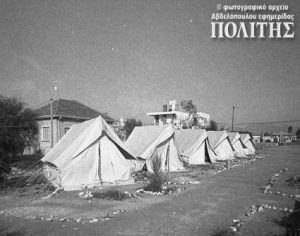
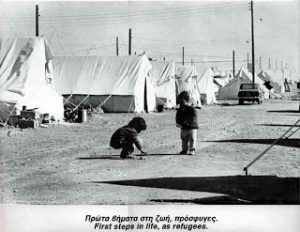
- 1/3 of the total Greek population of Cyprus were displaced (that amounts to about 200,000 people).
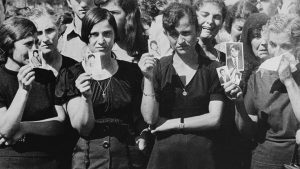
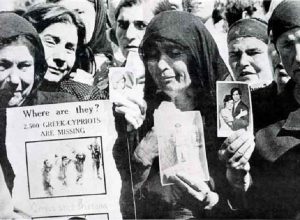
- 1,619 Greek Cypriots were declared missing. Decades later, only 765 of them have been identified (Committee on Missing Persons, September 2026); Turkey has never fully accounted for the rest. Many of these were last seen being sent for torture in Turkey, most of which are presumed dead, with relatives still hoping that one day they will find out what happened to their loved ones.
- 37% of the geographical area of the Republic of Cyprus is still under illegal military occupation, since 1974.
- About 300 Greek Cypriots and Maronites remain enclaved in the occupied north today, out of more than 12,000 in 1974, living under strict Turkish stratocracy.
The enclaved over time
| Year | Enclaved Greek Cypriots & Maronites (estimate) |
|---|---|
| 1974 | 12,289 |
| 1975 | 9,544 |
| 1980 | 1,807 |
| 1990 | 824 |
| 1995 | 546 |
| 2014 | 343 |
| 2024 | about 300 |

The Turks pillaged and completely destroyed Christian churches, monasteries and cemeteries, and illegally traded monuments and heirlooms abroad, in order to distort the Greek cultural heritage of the island. Turkey forced settlement of thousands of innocent Turkish people in the northern side of Cyprus, with a view of altering the initial population percentage.
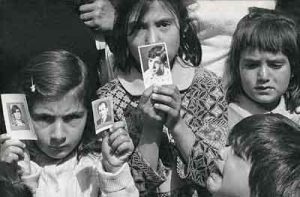
The tragedy of people losing their homes and families, the uncertainty for the future of the prisoners of war, the grief of innocent children… are all VIOLATIONS of human rights and should be condemned.
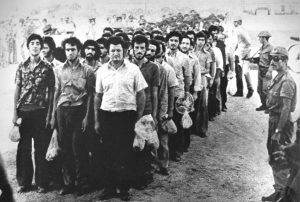
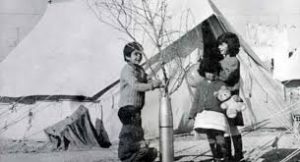
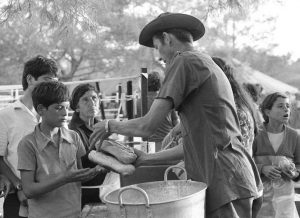
1974 in Pictures
Who are We?
METOPO Cypriot Student Movement is a non-partisan organisation, founded in 2006, where a group of students impulsively decided that they had a duty to defend their values and ideals.
Amongst us are students deriving from different political backgrounds, whose common goal and ambition is neither self-projection, nor the promotion of any political party. As a movement based in the UK, we are constantly trying to resolve the issue of Turkish propaganda, and our aim is to awaken our fellow students. Our ambition is to help the development of conscientious citizens who are prepared to fight for their rights and freedom, and we ask for your support in our struggle to battle.
“He who remains silent, is taken to consent”